
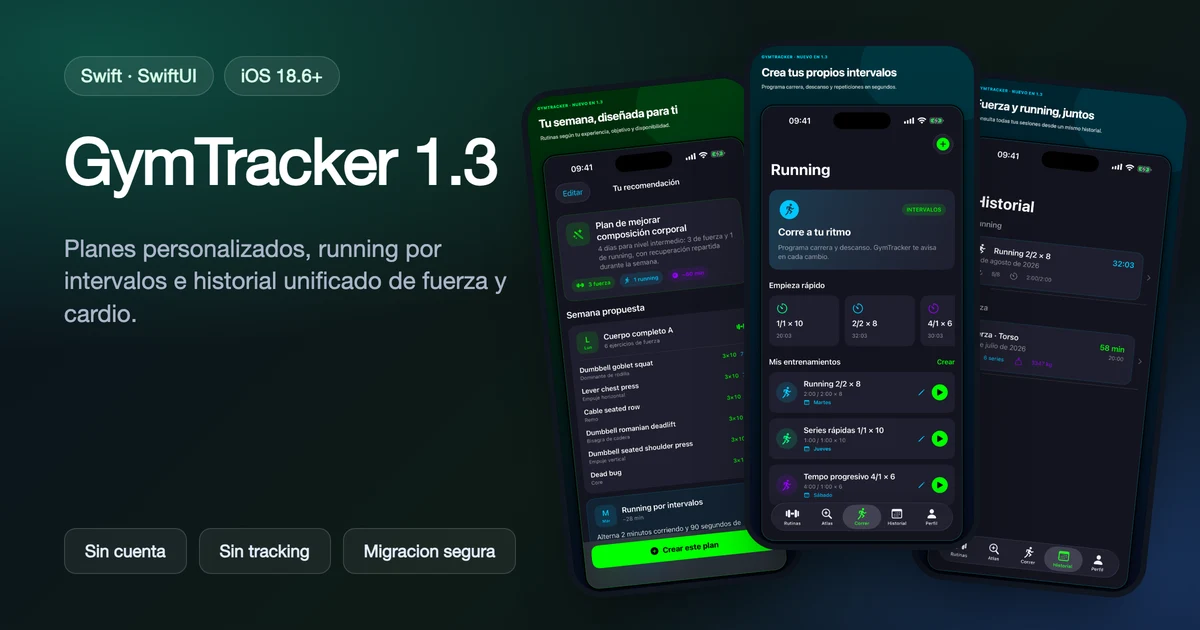
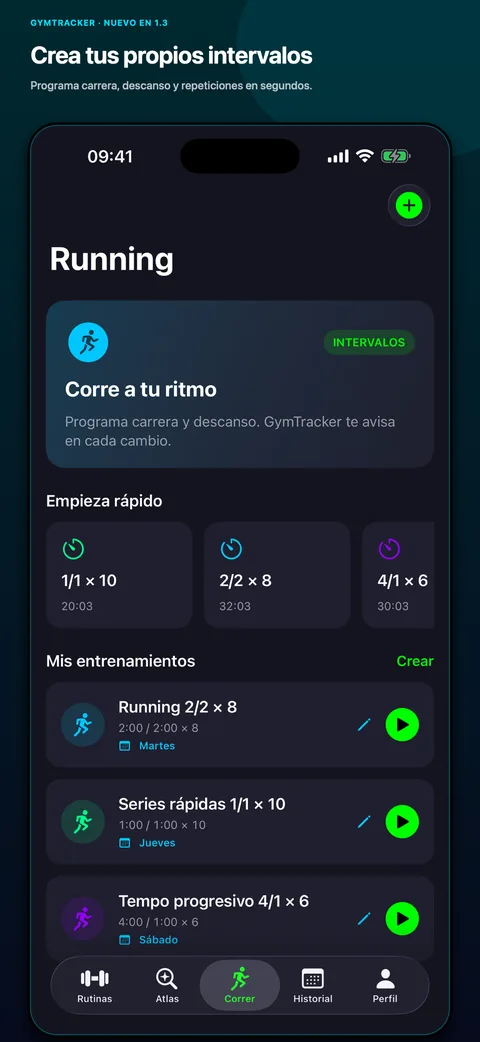
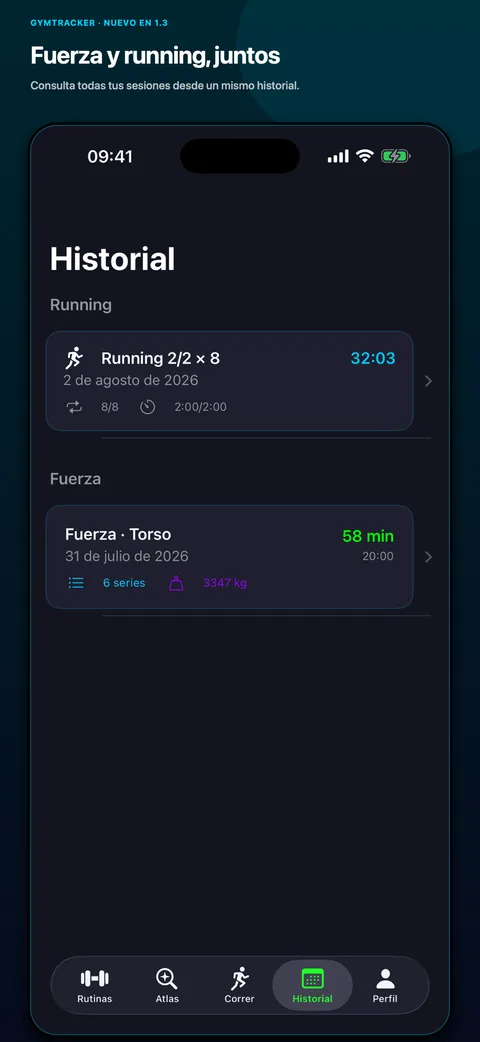
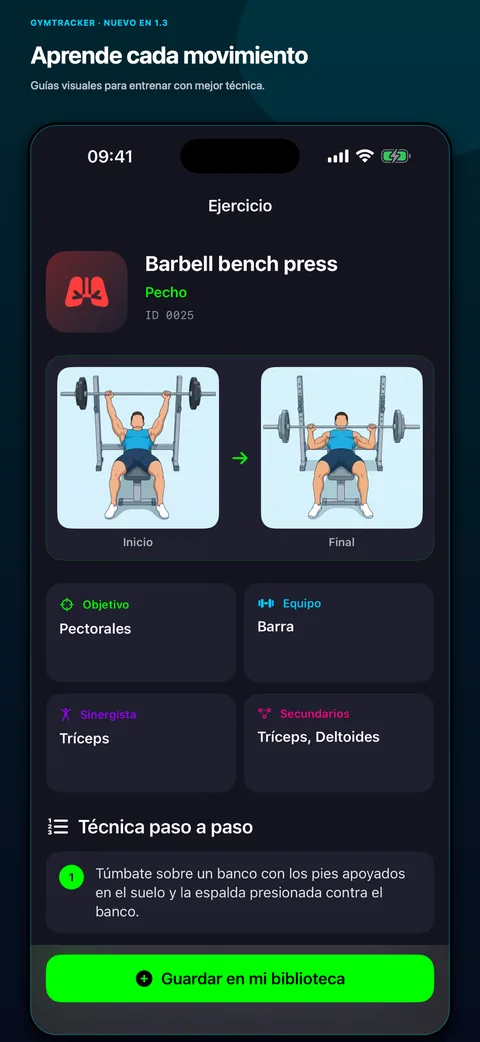
GymTracker is an iOS app I took from idea to the App Store as its sole designer and developer. The problem was not only storing sets, but turning workout logging into a tool that helps decide what to do next: routines, history, volume, estimated 1RM, body weight and consistency. The app works offline with SwiftUI and CoreData, includes a bilingual 1,324-exercise atlas and Smart Swap, and version 1.3 adds personalized plans, interval running with voice reminders and unified strength and cardio history. It requires no account and collects no data.
Problem, stack and result
Problem solved
Offline-first training product that turns sets, reps and running sessions into useful history, with a 1,324-exercise atlas, Smart Swap and progress metrics.
Technologies used
Core stack: Swift, SwiftUI, CoreData. Project technologies: Swift, SwiftUI, CoreData, Xcode, iOS 18.6+, Localization, Offline-first.
What I did
My role was Sole designer and developer. I worked on the technical implementation, product approach and enough documentation for the result to be explained and evolved.
Result or learning
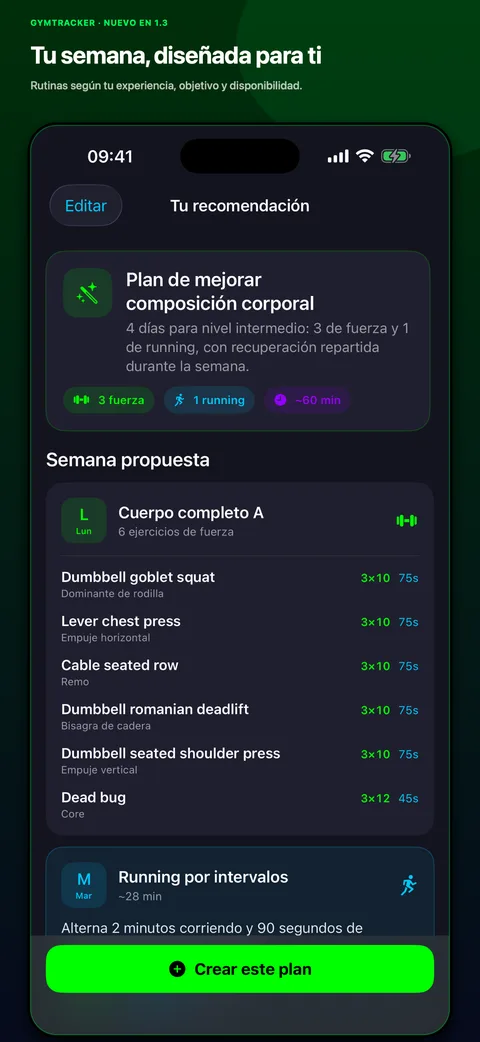
Own product published on the App Store and developed end-to-end by one person. Published version 1.3: personalized plans, interval running and unified strength and cardio history.
Product in use
Highlights
- Own product published on the App Store and developed end-to-end by one person.
- Published version 1.3: personalized plans, interval running and unified strength and cardio history.
- Offline-first logging with SwiftUI and CoreData, with no account or data collection.
- Bilingual offline atlas with 1,324 exercises, search, filters, favorites and instructions.
- Smart Swap preserves sets, reps, rest and history when replacing exercises.
- Volume, estimated 1RM, body weight and consistency metrics with charts and a heatmap.
- Safe migration across versions without losing routines or history.
- Public 5.0 / 5 rating; compatible with iOS 18.6 or later.